Brutus won the crowd in Rome – and then left the forum, giving the last word to Antony. A note on the decision that is made after you have left the room.
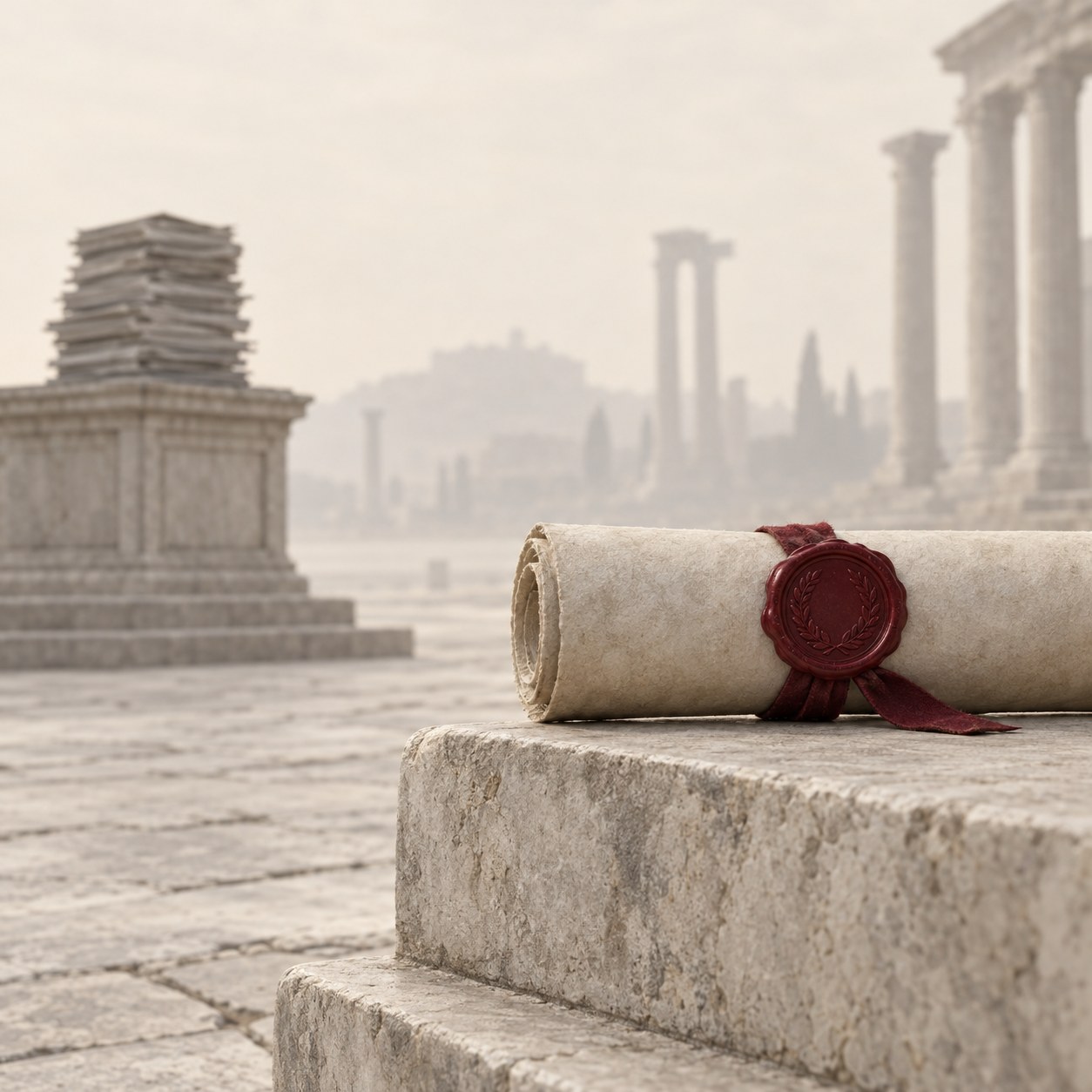
I am rereading Shakespeare, starting with Julius Caesar. One scene has stayed with me for days, and it is not the famous one.
Caesar is dead. The conspirators have to explain themselves to Rome. Cassius, the shrewder of the two, warns Brutus not to let Mark Antony speak at the funeral: “Know you how much the people may be moved / By that which he will utter?” (Folger Shakespeare Library)
Brutus is not worried. He will go “into the pulpit first” and show the reasons. Reason, he believes, will hold.
And at first it does. Brutus speaks – honestly, by his own lights – “not that I loved Caesar less, but that I loved Rome more” (Folger). The crowd is with him. “Live, Brutus, live, live!” Someone even shouts: “Let him be Caesar.”
Then Brutus does something remarkable. He asks the people to stay and listen to Antony – “not a man depart, / Save I alone, till Antony have spoke” – and he leaves.
He has won the room. And he walks out of it before the last word is spoken.
We all know what happens next. Antony does not argue. He shows Caesar’s mantle. He produces the will and reads it: every citizen gets seventy-five drachmas, and Caesar’s gardens are left to the people “and to your heirs forever” (Folger). By the end, the crowd that wanted to crown Brutus is ready to burn his house.
Let me be clear: I do not hold Antony up as a model. However brilliant his speech is, it is manipulation. “Mischief, thou art afoot,” he says when it is done. That is not how I want anyone to sell anything.
The lesson I take is about Brutus.
The decision is made after you leave the room.
I have seen this scene many times in business, without togas.
A technology company presents to an owner-led / short-decision-chain firm. The presentation goes well. The owner nods, asks good questions, says “I am definitely interested”. Everyone leaves with a good feeling.
The decision, however, is not made in that meeting. It is made a few days later – over dinner with a business partner, in a call with the accountant, in a corridor with the person who will have to live with the new system. Sometimes in a call from a competitor.
In a short decision chain this is even more true. There is no committee and no formal evaluation, which feels like an advantage. But it also means the decisive conversation happens informally, quickly, and without you.
Somebody will speak last. The only question is whether your proposal is still in the room when they do.
Reasoning does not travel well. Concrete things do.
Brutus left Rome with reasons: liberty, ambition, the good of the republic. All abstract. All true, perhaps. But reasons need their speaker. Without Brutus in the forum, they had nobody to defend them.
Antony had objects. A mantle the crowd recognised. A will with a sum in it. A garden they could walk in. Things that spoke for themselves, and for each listener personally.
Most technology proposals I see are Brutus speeches. Architecture, features, principles, the reasons why advanced technology is better. Correct – and very hard for an owner to repeat to his accountant the next evening.
What survives the conversation you are not part of is something much simpler: what changes for this business, in its own numbers and its own words. Not the drachmas of manipulation. The plain, verifiable answer to “what do we get?”
Honnan, min keresztül, hová.
This is why I keep coming back to three questions: from where, through what, to where. Where is the business today? Through what does the technology move it? Where does it arrive – in revenue, in time, in risk?
If those three answers are clear enough for the owner to say them aloud without you, your proposal can stay in the forum after you have gone.
If they are not, someone else will have the last word.
A question to you:
When the decision about your last proposal was made – who was in the room?
Gábor
I help owner-led / short-decision-chain tech companies turn advanced technology into revenue. If that’s you, write me: priegl.gabor@gmail.com
Leave a Reply